
In the world of professional localization, efficiency is the name of the game. If you are looking to streamline your workflow, understanding what is an XLIFF file and how it functions within translation memory systems is the most practical skill you can acquire. By combining the right file formats with advanced translation memory technology, you can turn a tedious manual process into a high-speed, automated pipeline.
Understanding the XLIFF Format
XLIFF stands for XML Localization Interchange File Format. It is a standard specifically designed to pass translatable data between different translation memory tools. Unlike a standard Word document, an XLIFF file acts as a container. It extracts the text from its original environment whether that is a complex piece of software code, a mobile app, or a website and places it into a bilingual structure. When you load this file into a cat tool, you are presented with a clean, distraction-free workspace. The source language is locked on the left, and your workspace for the translation is on the right. This setup prevents accidental changes to the file's underlying code, ensuring that when you export the finished project, it remains functional and bug-free.
Leveraging Translation Memory Software
The real power of an XLIFF-based workflow comes from the use of translation memory software. As you work, the software saves every confirmed segment into a database. If you encounter the same sentence later a common occurrence in technical manuals or UI strings the cat translation tool will automatically suggest the previous translation.
This is not just about convenience; it is about tangible speed and accuracy. Most translation memory tools offer a feature called "Analysis," which scans your XLIFF file to see how much of the content has been translated before. This allows project managers to provide accurate quotes and realistic deadlines based on the "leverage" available in the existing translation memory.
How XLIFF Works Within a CAT Tool
To maximize your productivity, a typical professional workflow using a tool cat (industry shorthand for CAT tools) follows these steps:
-
The system converts the original file (like .json or .html) into an XLIFF.
-
The translation memory technology compares the source language in the XLIFF against the TM database.
-
The translator fills in the gaps in the cat translation tool, utilizing suggestions for "fuzzy matches" (similar sentences) and "100% matches" (identical sentences).
-
Automated QA checks ensure that tags and placeholders within the XLIFF are preserved.
-
The translated XLIFF is converted back into its original format, now localized and ready for deployment.
Professional Needs Translation Memory Tools
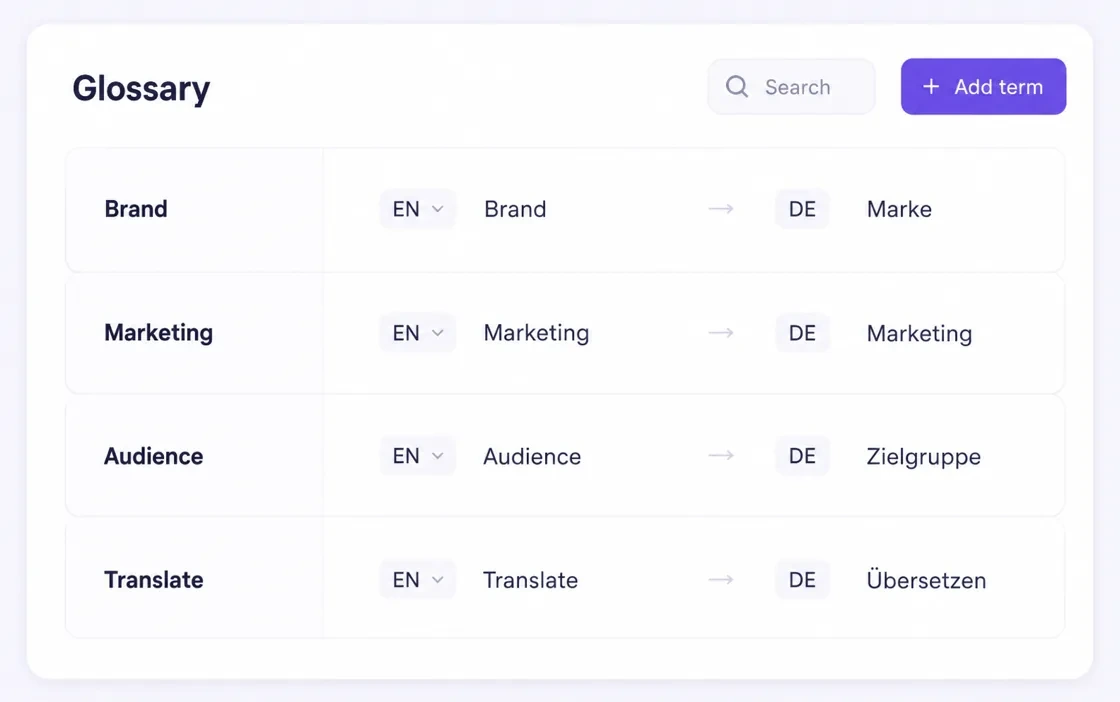
Relying on human memory alone is impossible when dealing with thousands of words across dozens of projects. Translation memory systems act as a digital brain. They ensure that if you translated a specific button as "Submit" six months ago, you won’t accidentally translate it as "Send" today, maintaining a unified brand voice. Furthermore, using a modern cat tool allows for seamless collaboration. If a project is too large for one person, XLIFF files can be split among a team. Because they are all connected to the same translation memory software, they can see each other's updates in real-time, preventing inconsistencies before they even happen.
Reducing Costs with Translation Memory Systems
For businesses, the primary reason to insist on XLIFF and translation memory technology is the cost-saving potential. Since you never have to translate the same sentence twice, the cost of localization drops significantly as your database grows.
-
New Content Requires full effort and is paid at the standard rate.
-
Fuzzy Matches These are "near misses" where the tool cat provides a starting point, requiring only minor editing.
-
Perfect Matches These are 100% identical to previous work and are often processed at a minimal cost.
This "re-use" of data is only possible when your source language and target language are stored in a structured, interchangeable format like XLIFF.
Choosing the Right Translation Memory Software
Not all platforms handle XLIFF files with the same level of sophistication. When selecting a cat translation tool, you should look for features that enhance the XLIFF experience:
-
Does the tool clearly highlight code tags so you don't break them?
-
How fast can the engine search through millions of segments in your translation memory?
-
Can the tool export a "clean" XLIFF that can be opened by other translation memory tools if needed?
Efficiency with XLIFF and TM
Mastering XLIFF files is the fastest way to improve your translation output. By utilizing translation memory software, you protect the integrity of your technical files, ensure linguistic consistency, and drastically reduce the time spent on every project. In a competitive global market, these translation memory systems are the difference between struggling with deadlines and delivering high-quality, professional work ahead of schedule. By making translation memory technology the core of your strategy, you turn every word you translate into a long-term asset that adds value to your business and provides a better experience for your international users.