
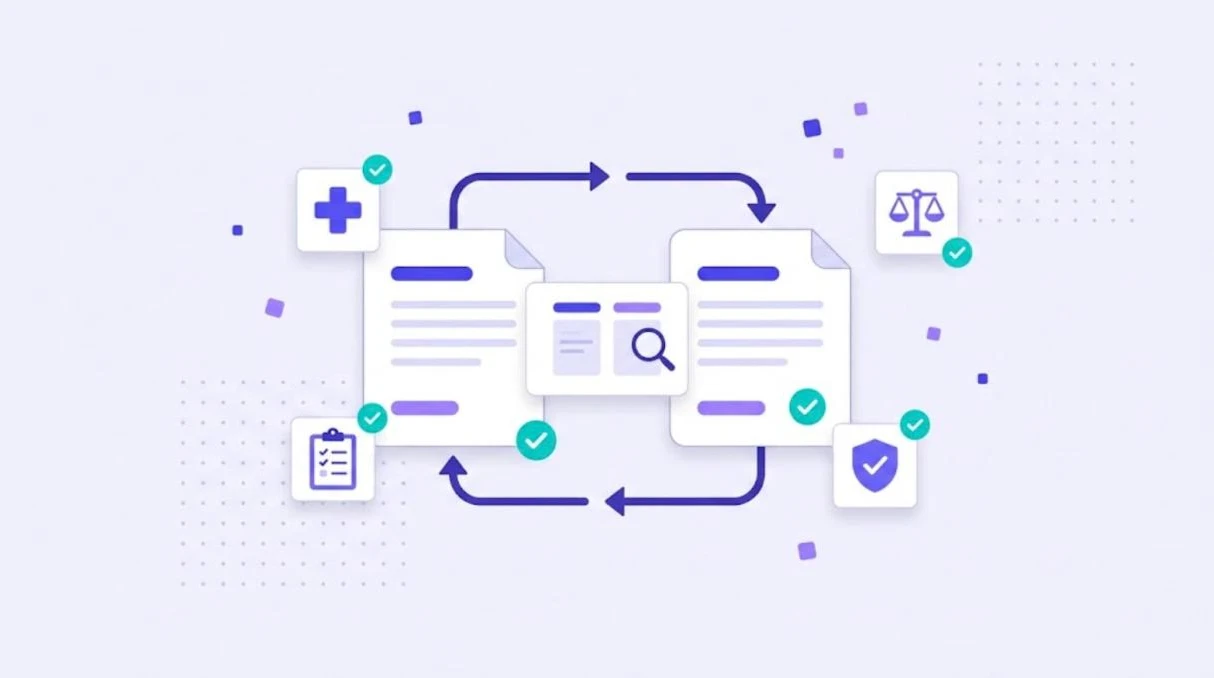
Back translation is the process of translating a translated text back into the original language by a second, independent translator, so the two source-language versions can be compared to check whether the meaning was preserved. It is widely used in clinical research, medical questionnaires, legal content and market research, where a small change in meaning can have serious consequences. This guide explains how back translation works, when you need it and its limits.
How Back Translation Works
- Forward translation. A translator translates the source text into the target language.
- Back translation. A second translator, who has not seen the original, translates the target text back into the source language.
- Comparison. A reviewer compares the original and the back translation and flags differences in meaning.
- Reconciliation. The team discusses each difference and decides whether the forward translation needs to change.
- Finalization. The corrected translation is approved and documented.
When Is Back Translation Used?
| Field | Typical content | Why it matters |
|---|---|---|
| Clinical trials and life sciences | Patient questionnaires, informed consent forms | Regulators and ethics committees often require it |
| Medical devices | Instructions for use, labeling | Safety-critical wording |
| Market research | Surveys | Questions must measure the same thing in every country |
| Legal and compliance | Contracts, policies | Meaning must be legally equivalent |
| Marketing | Slogans, claims | Checking that a claim does not change in translation |
In health research, the widely referenced ISPOR principles of good practice describe back translation as one step in a multi-step process that also includes reconciliation, cognitive debriefing and review.
Back Translation vs Other Review Methods
- Bilingual review: a reviewer compares source and target directly. Faster and often more effective for general content.
- Back translation: gives non-speakers of the target language visibility into meaning. Useful for stakeholders who cannot read the translation.
- Cognitive debriefing: tests the translation with real users to check they understand it as intended.
For general quality processes, read our translation quality assurance checklist.
Limitations of Back Translation
- It does not prove quality. A good back translation can come from an awkward forward translation, and vice versa.
- It adds time and cost. You pay for a second full translation and a reconciliation step.
- Literal back translations can create false alarms when the forward translation was correctly adapted to the culture.
- It does not check fluency or tone in the target language.
Best Practices
- Use independent translators who have not seen each other's work.
- Ask back translators to stay close to the target text, not to polish it.
- Document every difference and how it was resolved.
- Keep approved terms in a shared term base so later projects stay consistent.
- Store the final, approved translation in translation memory for reuse.
Can AI Do Back Translation?
Machine translation can produce a quick back translation for internal checks, which helps spot obvious errors. For regulated work, however, guidelines generally expect qualified human translators and a documented reconciliation process. AI is a useful assistant, not a replacement for this step. Our article on technical translation covers related quality requirements.
Managing Back Translation Projects in WordBeam
WordBeam lets you run forward translation, review and reconciliation in one CAT editor, with translation memory, terminology and comments on every segment. Teams can assign separate translators, track every change and keep an audit trail of decisions. Try it free for 14 days.
Frequently Asked Questions
What is the purpose of back translation?
To check whether the meaning of a translation matches the original, especially when reviewers cannot read the target language.
Is back translation required for clinical trials?
It is commonly requested for patient-facing materials and questionnaires, but requirements vary by sponsor, regulator and ethics committee.
Who should do back translation?
A qualified translator who is a native speaker of the source language and has not seen the original text.