
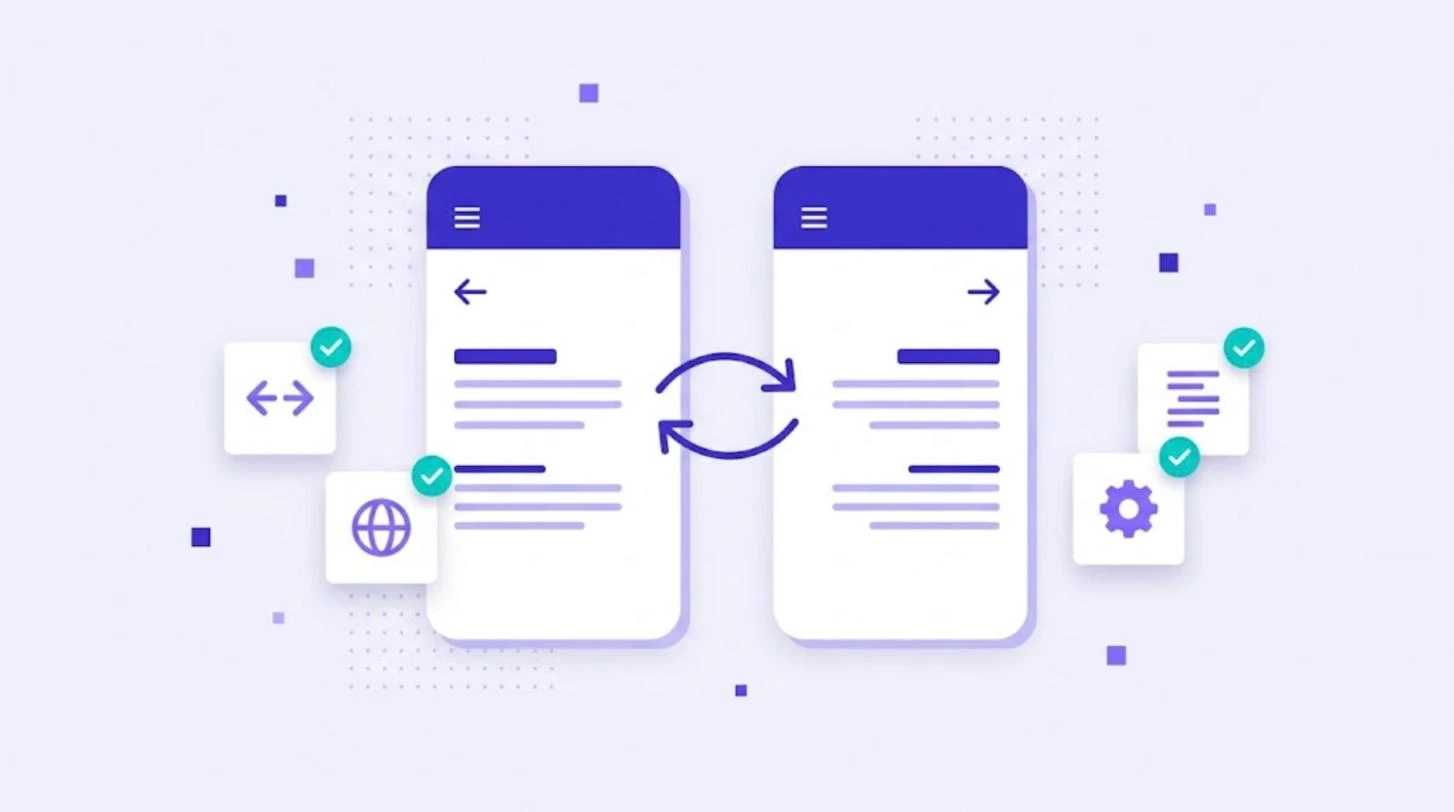
RTL (right-to-left) languages are languages written from the right side of the page to the left, most notably Arabic, Hebrew, Persian (Farsi) and Urdu. Together they are used by hundreds of millions of people, which makes RTL support essential for any product targeting the Middle East, North Africa or South Asia. This guide lists the main RTL languages and explains how to localize websites and apps for right-to-left reading.
List of RTL Languages
| Language | Script | Main regions |
|---|---|---|
| Arabic | Arabic | Middle East and North Africa |
| Hebrew | Hebrew | Israel |
| Persian (Farsi, Dari) | Arabic-based | Iran, Afghanistan |
| Urdu | Arabic-based | Pakistan, India |
| Pashto | Arabic-based | Afghanistan, Pakistan |
| Sindhi | Arabic-based | Pakistan |
| Kurdish (Sorani) | Arabic-based | Iraq, Iran |
| Uyghur | Arabic-based | China |
| Yiddish | Hebrew | Jewish communities worldwide |
| Dhivehi | Thaana | Maldives |
Some languages, such as Kurdish or Punjabi, are written in different scripts depending on the region, so always confirm the script with your in-market team.
What Changes in an RTL Interface
- Layout mirroring. Navigation, sidebars, progress steps and reading order flip from left-right to right-left.
- Text alignment. Paragraphs align to the right.
- Directional icons. Back and forward arrows, chevrons and progress indicators are mirrored. Icons that show real objects, such as a clock or a play button, usually are not.
- Bidirectional text. Numbers, product names, URLs and code stay left-to-right inside RTL sentences, which the Unicode Bidirectional Algorithm handles in most cases.
- Typography. Arabic script is cursive and needs suitable fonts, line height and sizes.
How to Support RTL on the Web
- Set
dir="rtl"and the correctlangattribute on the<html>element for RTL locales. - Use CSS logical properties such as
margin-inline-startandpadding-inline-endinstead of left and right. - Use flexbox and grid, which follow the document direction automatically.
- Isolate user-generated or mixed-direction text with
<bdi>ordir="auto". - Mirror directional icons and test every screen.
The W3C explains best practices in its guide to structural markup and right-to-left text in HTML.
RTL in Mobile Apps
Android supports RTL layouts when you use start and end attributes instead of left and right and enable RTL support in the manifest. iOS mirrors standard UIKit and SwiftUI layouts automatically when the device language is RTL. Read our guides to Android localization and iOS localization for platform details.
Translating Into RTL Languages
- Work in a translation editor that displays RTL text correctly and keeps tags and placeholders in the right place.
- Give translators context, including screenshots, because word order in mixed sentences can be confusing.
- Agree on terminology for technical terms that are often left in English.
- Check numerals: some markets use Western Arabic digits (0–9), others Eastern Arabic digits.
- Always test the final layout in context, as described in our guide to localization testing.
Common RTL Mistakes
- Translating text but leaving the layout left-to-right.
- Mirroring logos, media controls or charts that should stay as they are.
- Concatenating strings, which breaks word order in RTL languages.
- Using fonts without proper Arabic or Hebrew support.
- Skipping in-context review by native speakers.
Localize for RTL Markets With WordBeam
WordBeam supports Arabic, Hebrew, Persian, Urdu and other RTL languages in its CAT editor, with protected tags and placeholders, translation memory and glossaries. QA checks catch missing tags and numbers before export, and AI engines help you produce first drafts quickly. Start a free 14-day trial and translate your first RTL project today.
Frequently Asked Questions
Which languages are written right to left?
The most widely used RTL languages are Arabic, Hebrew, Persian and Urdu. Others include Pashto, Sindhi, Sorani Kurdish, Uyghur, Yiddish and Dhivehi.
Are numbers written right to left in Arabic?
No. Numbers are written left to right, even inside right-to-left text.
What is bidirectional text?
Bidirectional (bidi) text mixes right-to-left and left-to-right content, such as an Arabic sentence that contains an English brand name or a number.