
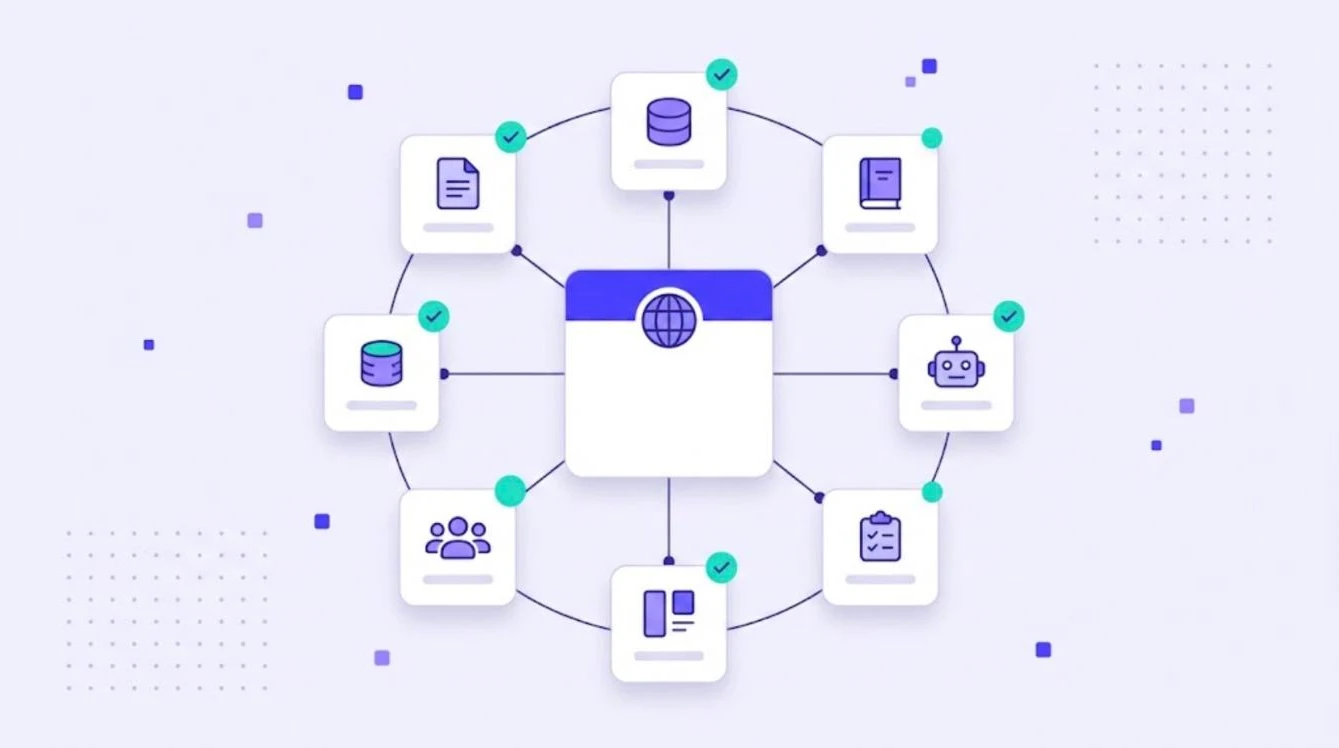
In translation, TMS stands for translation management system: software that manages the full translation process, including files, translation memory, terminology, machine translation, linguists, quality checks and delivery, in one platform. A TMS is to translation what a project management and content platform is to other teams: the single place where work is organized, done and tracked. This guide explains what a TMS does, how it differs from a CAT tool and who needs one.
What Does a TMS Do?
- Manages projects with languages, deadlines and assigned linguists.
- Stores language assets such as translation memory and term bases.
- Connects AI and machine translation engines for pre-translation.
- Provides an editor where translators and reviewers work.
- Runs QA checks on numbers, tags, terminology and consistency.
- Automates workflows and integrations with other systems.
- Reports on volume, progress and quality.
For a deeper look at the mechanics, read how a translation management system works.
TMS vs CAT Tool vs Machine Translation
| Tool | Main purpose | Typical user |
|---|---|---|
| CAT tool | Editor for translating segment by segment with memory and glossary | Translators |
| Machine translation engine | Automatic translation of text | Anyone, usually as a first draft |
| TMS | Manages the full process, people, assets and automation | Localization teams, agencies, project managers |
Modern platforms often combine all three. WordBeam, for example, is a TMS with a built-in CAT editor and several AI engines.
Other Meanings of TMS
Outside translation, TMS often means transportation management system or treasury management system. If you searched for "TMS translation", you most likely mean a translation management system, sometimes also called a localization platform. See what is a localization platform for the overlap between the terms.
Who Needs a Translation Management System?
- Companies translating websites, apps, documentation and marketing into several languages.
- Translation agencies managing many clients and linguists.
- Freelance translators who want memories, glossaries and AI in one place.
- Software teams releasing new strings every sprint.
Benefits of Using a TMS
- Lower costs through translation memory reuse.
- Faster turnaround with AI pre-translation and automation.
- Consistent terminology across every language and channel.
- Clear visibility into progress and quality.
Read more in our article on the benefits of a translation management system. The W3C explains why translation and localization are essential for a global web in its internationalization overview.
Try WordBeam, an AI-Powered TMS
WordBeam is a cloud translation management system with a professional CAT editor, translation memory, term base, QA and built-in AI translation engines including DeepL, GPT, Claude and Grok. It supports more than 15 file formats and starts at $25 per month. Try it free for 14 days with 10,000 words on WordBeam pricing.
Frequently Asked Questions
What does TMS stand for in translation?
TMS stands for translation management system.
Is a TMS the same as a CAT tool?
No. A CAT tool is the translator's editor; a TMS manages the whole process around it. Many TMS platforms include a CAT editor.
Do I need a TMS if I only translate into one language?
It still helps if you translate regularly, because translation memory, terminology and QA save time and keep quality consistent.